

BRICS Young Scientist Forum

BRICS Young Scientist Forum

About Us

About BRICS YSF 2026

A proposal for the creation of a BRICS Young Scientist Forum (BRICS YSF) was adopted at the 2nd BRICS STI Ministerial Meeting in Brasília in March 2015. During the VII BRICS Summit in Ufa, Russia, BRICS countries decided to host the Forum annually, beginning in 2016, with the country holding the BRICS Presidency hosting the event.

The Young Scientist Forum is an important platform for expanding international contacts among young scientists, including through the exchange of experience and best practices in supporting scientific research, with the participation of young scientists and postgraduate students from the BRICS countries.

The Forum promotes initiatives and contributes to establishing an integral system of international cooperation among future representatives of the science, technology and innovation systems of BRICS countries. These activities contribute to the sustainable development of BRICS cooperation and strengthen the role of young scientists and innovators in advancing science, technology and innovation.
The 11th BRICS Young Scientist Forum will provide an opportunity for young scientists from BRICS countries to exchange research experiences, identify emerging scientific and technological opportunities, and develop collaborative approaches to contemporary global challenges.

The 9th BRICS Young Innovators Prize will be organized as an integral component of the Young Scientist Forum. The Prize will recognize outstanding young innovators whose technological innovations, products, applications and services demonstrate potential for addressing important societal, environmental and economic challenges and contributing to sustainable development in BRICS countries.

The BRICS Young Innovators Prize provides a platform for young BRICS scientists and entrepreneurs to showcase innovative ideas, products and services and to exchange experiences in innovation and entrepreneurship. The initiative was introduced in 2018 during South Africa’s BRICS Presidency and has subsequently become an important platform for young innovators from BRICS countries.

The 11th BRICS Young Scientist Forum and 9th BRICS Young Innovators Prize will be held from 16 to 20 November 2026 in Bengaluru, India, organized by the National Institute of Advanced Studies (NIAS), Bengaluru, under the overall supervision of the Department of Science & Technology (DST), Government of India.

About DST

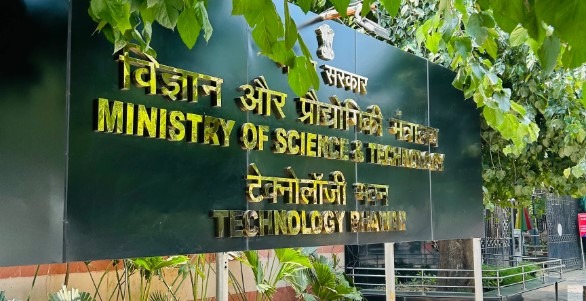
Ministry of Science & Technology, Technology Bhavan, New Delhi

India is among the top-ranking countries in the field of basic research. Indian science has come to be regarded as “one of the most powerful instruments of growth and development,” especially in an emerging and competitive economy.

New demands on the science and technology system call for major science projects that serve national needs and prepare for the technologies of the future. The Department of Science & Technology (DST) plays a pivotal role in promoting science and technology in the country, in a wide range of activities, from high-end basic research and cutting-edge technology development to serving the needs of the common man through skills and technologies.

Mission and Objectives

DST was established on 3 May 1971, following the success of the Green Revolution, which showed the innovative use of scientific methods. Over the following forty-three years, several DST programme streams grew into separate departments or ministries:

1971 Department of Science & Technology 3 May 1971
  • DBTDepartment of Biotechnology
  • DSIRDepartment of Scientific and Industrial Research
  • MoEFMinistry of Environment & Forests
  • MNREMinistry of New & Renewable Energy
  • DoEDepartment of Electronics
  • MoESMinistry of Earth Sciences
“The DST serves as a nodal agency connecting the science sector to the Government verticals.”
  1. aDeveloping S&T policies.
  2. bStrengthening human resources and institutional capacities.
  3. cEnabling the development and deployment of technologies.
  4. dCreating opportunities for societal interventions through S&T.
  5. eEstablishing and engaging in mechanisms of cooperation, partnerships and alliances.

These approaches aim at a holistic and systemic influence, with immediate, medium- and long-term relevance, impact across sectors, and synergies that optimise time, human, institutional and financial resources.

For nearly three decades, DST functioned as an extra-mural research funding agency, providing competitive research grants to investigators on the basis of technical merit.

It has since moved towards more proactive and participative functions, and links policies, plans, programmes and projects to their outcomes through forward and backward linkages.

  • Proactively identifying gap areas and creating new programmes and schemes
  • Evidence-based identification of gaps and needs, balancing competitive and development models
  • Advocating for larger resource allocations for science
  • Widening the stakeholder base, with emphasis on stakeholder engagement
  • Connecting programmes internally and improving planning and coordination of resources
  • Better understanding of local needs
  • Balancing equity, expansion and excellence

International S&T cooperation with friendly countries is a national priority, and DST has been assigned this task. DST works to foster excellence and leadership in research and development, in line with India's development goals, and to strengthen India's position nationally, regionally and globally.

About NIAS

The National Institute of Advanced Studies (NIAS) was conceived and founded in 1988 by the late J. R. D. Tata, as an institution for advanced multidisciplinary research.

Located in a green campus in Bangalore, NIAS serves as a forum that brings together people from varied intellectual backgrounds: administrators and managers from industry and government, leaders in public affairs, eminent people from various walks of life, and academics in the natural and life sciences, the humanities and the social sciences.

Its research teams span the natural and social sciences, the humanities and the arts, and the Institute is unique in its integrated approach to the intersections of science and technology, philosophy, social issues and leadership.

Its objective is to develop scholars, managers and leaders who can respond to the complex challenges that face contemporary India and global society.

The Institute has facilities for conferences, lectures and theatre programmes, notably the JRD Tata Auditorium and Lecture Halls.

It is located on five acres within the Indian Institute of Science campus, and its buildings have a distinctive architecture, including arched corridors. Fully furnished guest rooms are available for visitors and course participants.

NIAS organises public lectures and regional, national and international conferences, symposia and seminars, on its own or with other institutions, on topical research and matters of public concern.

Mission

  1. To integrate findings across the natural and social sciences, technology, the humanities and the arts through multidisciplinary research on complex Indian and global issues.
  2. To develop new leadership across all sectors of society.
  3. To share the results of its research through publications, courses and dialogues with leaders and the public.

BRICS STI Coordinating Ministries

Brazil

Ministry of Science, Technology and Innovation Esplanada dos Ministerios, Bloco E, 4 andar CEP: 70067-900 Brasilia-DF, Brazil

Russia

Ministry of Education and Science of the Russian Federation Department of Science and Technology 11 Tverskaya Street, 125993, Moscow, Russia

India

Ministry of Science and Technology Department of Science & Technology Technology Bhavan, New Mehrauli Road, New Delhi 110016

China

Ministry of Science and Technology 158, Fu Xing Road, Beijing, 100862

South Africa

Department of Science and Technology Private Bag x894, Pretoria, 001, RSA DST Building 672, Meiring Naude Road, Brummeria, Pretoria 0180